

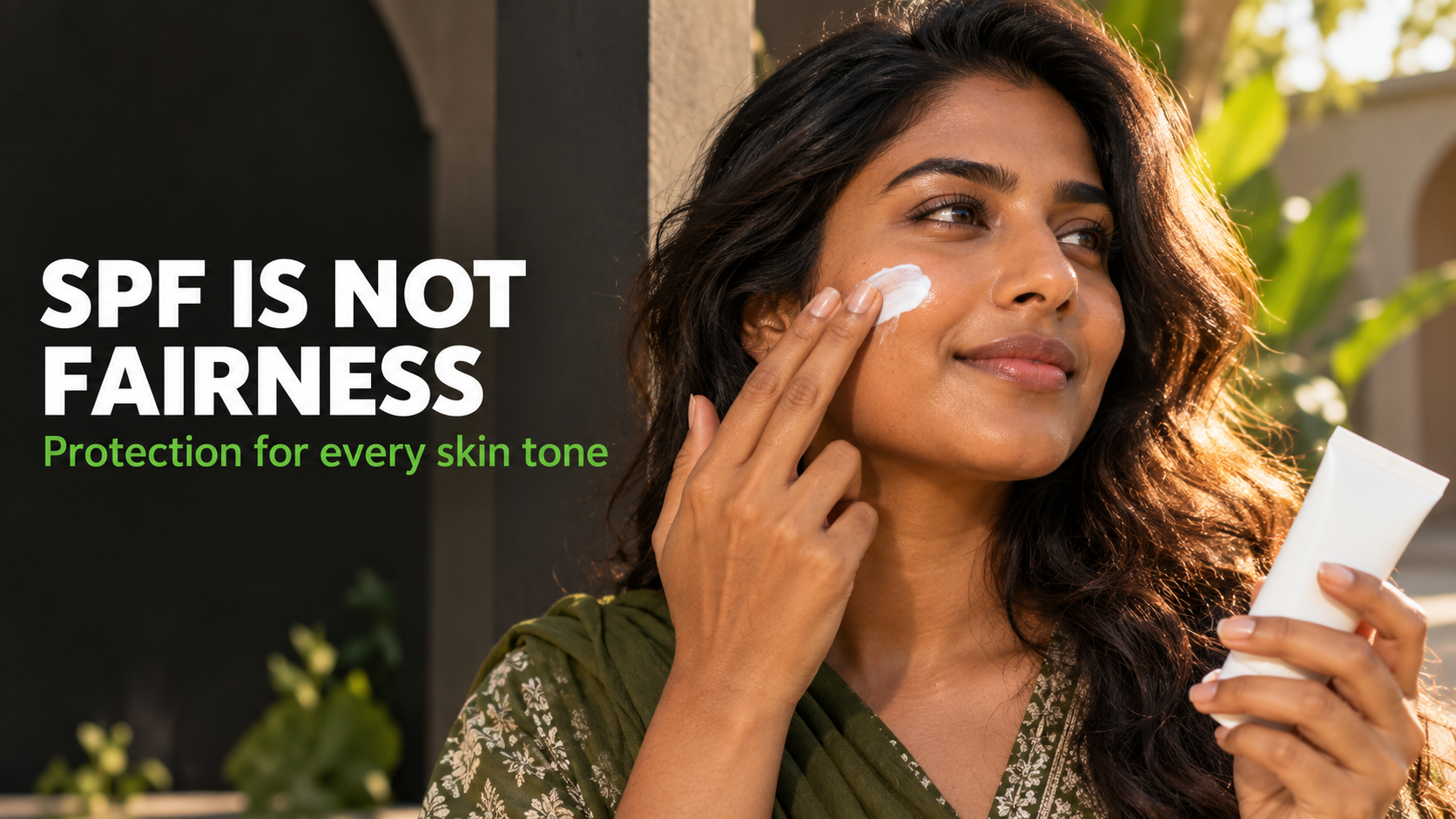
Quick Answer: Nahi, sunscreen aap ko gora nahi karta. Ye aap ki natural skin tone ya genetics nahi badalta. Sunscreen ka kaam hai tanning, sun damage aur dark spots ko barhne se rokna. Agar regular istemal se skin zyada even lagti hai, to wajah ye hai ke nayi sun damage nahi ho rahi, na ke cream ne rang halka kar diya.
Does Sunscreen Make You Fair? Poori Sachchai
Pakistan mein sunscreen ke baare mein sab se bara sawal yehi hai: kya ye skin ko gora karta hai? Kuch log is umeed mein sunscreen khareedte hain, aur kuch is darr se nahi lagate ke kahin rang badal na jaye. Dono soch ghalat hain. Sunscreen na to rang gora karta hai, na kaala.
Dhoop ke UV rays skin mein melanin ko active kar dete hain, jis se tanning aur uneven pigmentation hoti hai. Sunscreen is process ko slow karta hai. Isi liye jab aap mahine tak roz sunscreen lagate hain to naye daagh aur tanning kam banti hain, aur purane daagh dhoop se gehre nahi hote. Is ko log “gora hona” samajh lete hain, jabke asal mein ye protection hai.
| Sawal | Jawab |
|---|---|
| Kya sunscreen natural rang badalta hai? | Nahi |
| Kya tanning rokta hai? | Haan, sahi istemal se tanning kam hoti hai |
| Kya dark spots gehre hone se bachata hai? | Haan, UV se hone wali pigmentation kam karne mein madad |
| Kya whitening cream ka replacement hai? | Nahi, ye alag kaam hai |
| Kya roz lagana chahiye? | Haan, subah har din |
Jo sunscreen ya cream “gora” karne ka wada kare, usse hoshiyar rahein. Aise wadon ke peeche aksar sakht ingredients hote hain. Is par steroid-free mercury-free skincare guide zaroor parhein.
Myth 2: Sunscreen Se Vitamin D Ki Kami Hoti Hai?
Pakistan mein vitamin D ki kami bohat aam hai, aur isi liye log sunscreen se dartay hain ke kahin masla aur na barh jaye. Magar roz ke chhote chhote dhoop ke exposure, jaise gaari tak chalna, balcony mein khade hona, ya chhote errands, mein sunscreen lagane se vitamin D par koi ahem farq nahi paida hota. Vitamin D ki kami ke asal sabab khurak, indoor lifestyle, kapre aur dhoop mein kam waqt guzarna hote hain.
Agar aap ko vitamin D ki fikar hai, to doctor se blood test karwa kar mashwara lein. Sunscreen chhodna iska hal nahi hai.
Myth 3: Ghar Ke Andar Sunscreen Ki Zaroorat Nahi
UVA rays window ke sheeshe se guzar sakti hain. UVA ka taalluq premature aging aur dark spots se hota hai. Agar aap ghar, office ya gaari mein khirki ke paas lamba waqt guzarte hain, to skin ko UVA mil raha hota hai. Pakistan mein bade windows aur dopahar ki tez roshni is baat ko aur ahem bana deti hain.
| Jagah | Sunscreen Zaroori? |
|---|---|
| Bahar dhoop mein | Bilkul, reapply bhi karein |
| Gaari mein | Haan, khirkiyon se UVA aata hai |
| Office, khirki ke paas | Haan |
| Poora din andar, khirki se door | Kam khatra, magar roz ki aadat banana behtar |
Kab aur kitni dair baad dobara lagana hai, ye sunscreen reapply guide mein detail se hai.
Myth 4: Sardiyon Mein Sunscreen Skip Kar Sakte Hain?
Nahi. Pakistan mein UV index saal ke zyada tar hisse mein kaafi hota hai, aur baadal UV ko mukammal nahi rokte. Lahore aur Karachi jaise shehron mein sardi mein dhoop halki lagti hai, magar UV exposure khatam nahi hota. Sunscreen ko sirf garmi ka product samajhna pigmentation aur premature aging ki aam wajah hai. Sardi ki skin care ka poora plan winter skin guide mein hai.
Sunscreen Asal Mein Kya Karta Hai?
- Tanning aur sunburn se bachata hai.
- Dark spots aur uneven pigmentation ko barhne se rokta hai.
- Premature aging, fine lines aur elasticity ki kami se bachata hai.
- Waqt ke saath jama hone wali sun damage kam karta hai.
Ye prevention hai, correction nahi. Agar aap ke pehle se daagh hain, to unka alag treatment hota hai, jaise best brightening cream aur sunscreen ka combination.
SPF Aur Dark Skin Ya Wheatish Skin Ka Rishta
Gehri ya wheatish skin mein melanin zyada hota hai aur ye thori natural protection deta hai, magar ye sunscreen ka replacement nahi. Pakistani skin tones mein bhi pigmentation, dark spots aur tanning hoti hai. Isliye har skin tone ko sunscreen chahiye. Dark skin ke liye sunscreen kaise chunein, ye alag guide mein hai: sunscreen for dark skin.
Sunscreen Ka Texture: Log Isse Kyun Chhor Dete Hain
Sab se bari wajah texture hai. Heavy, chipchipa ya white cast chhodne wala sunscreen log ek do dafa lagate hain aur phir chhor dete hain. Isi liye gel formula oily aur combination skin walon ke liye zyada aasaan rehta hai.
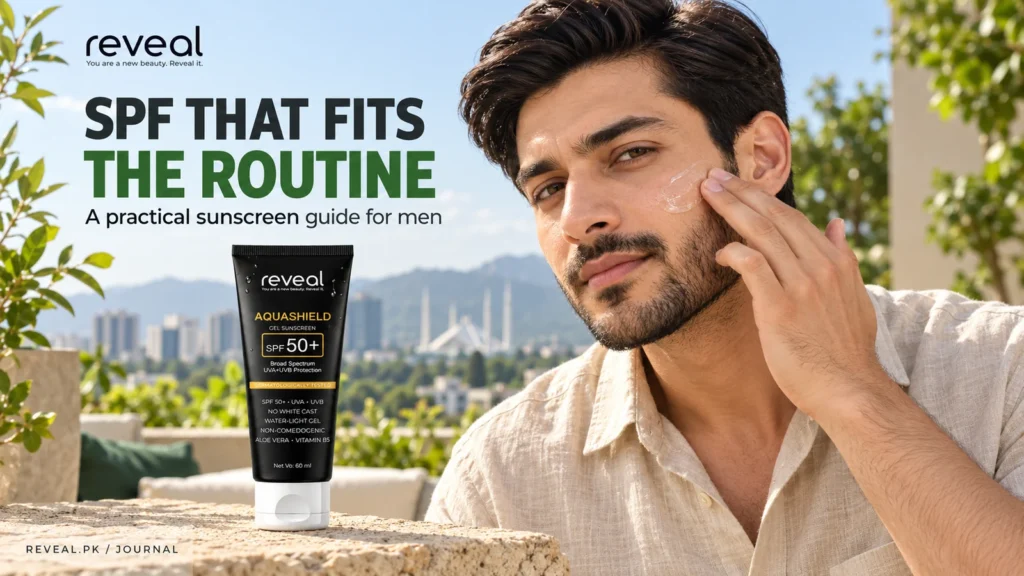
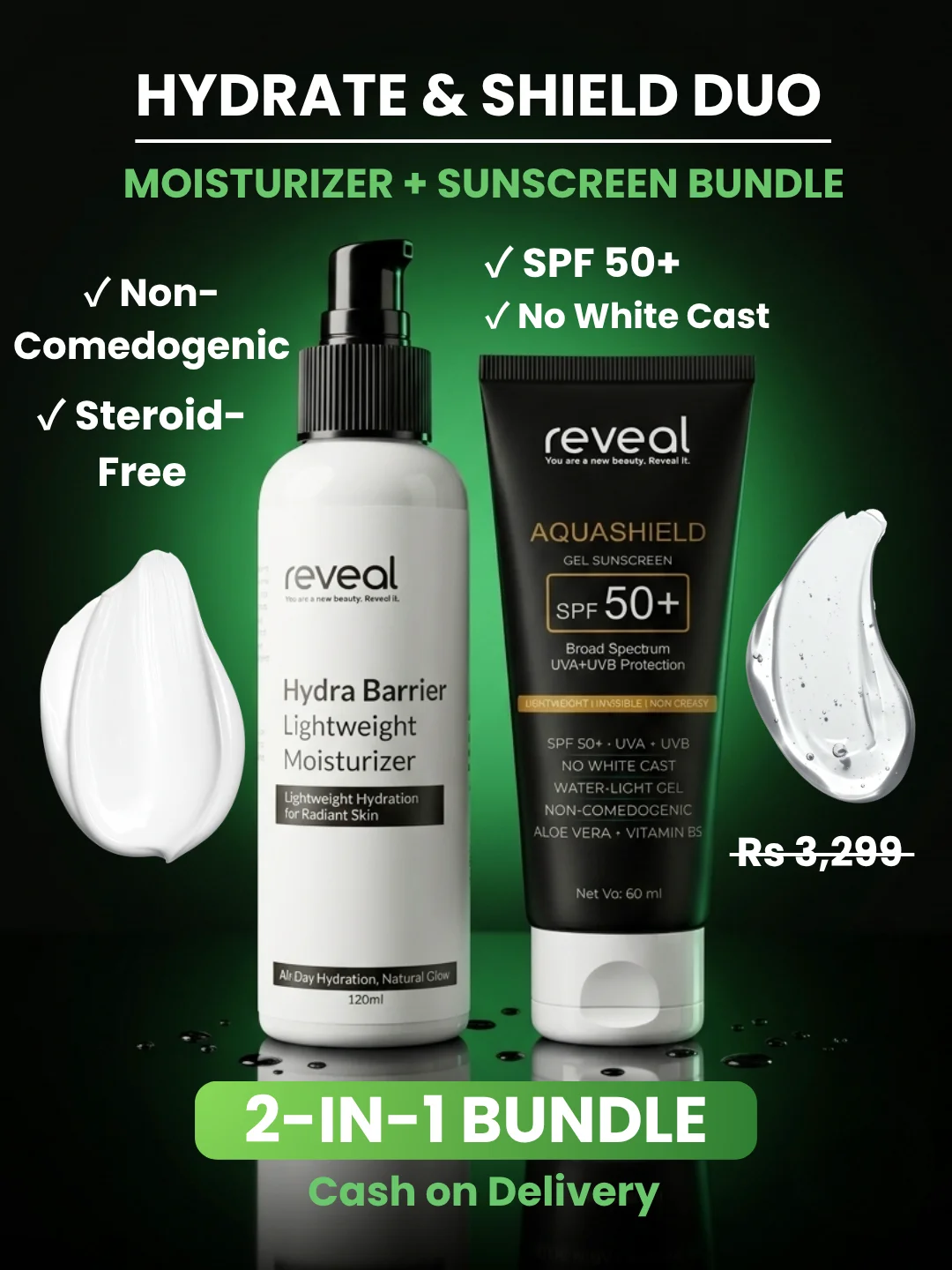
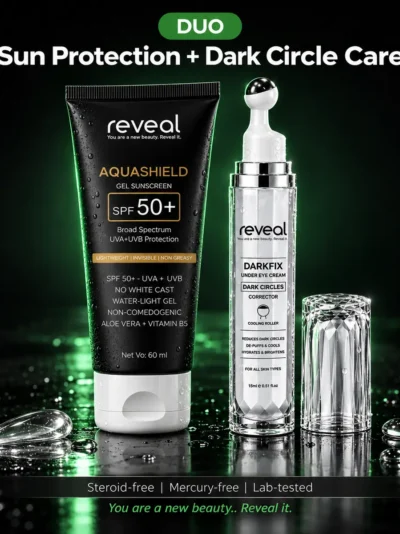
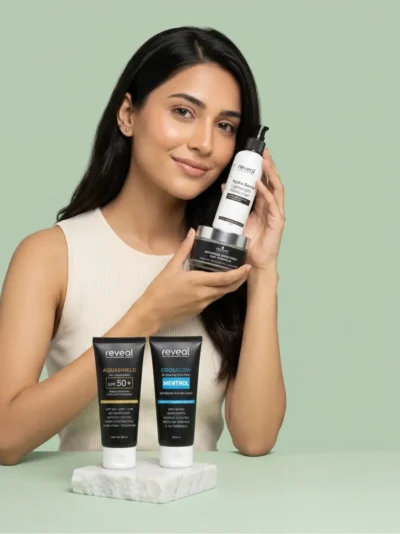
Reveal AquaShield SPF 50+ Gel Sunscreen (60ml, Rs 1,080) ek lightweight gel hai jo oily aur acne-prone skin ke liye bana hai. Is mein niacinamide, aloe vera aur vitamin B5 hain. Broad spectrum UVA aur UVB protection, non-comedogenic, aur no white cast. Steroid-free, mercury-free aur lab-tested. Poori sunscreen comparison best sunscreen for oily skin guide mein hai. American Academy of Dermatology bhi rozana sunscreen ke istemal ki tajweez karta hai.
Sunscreen Lagane Ka Sahi Tareeqa: Short Steps
- Face wash se chehra saaf karein aur moisturizer lagayein.
- Do ungliyon ki lambai jitni sunscreen nikalein.
- Maatha, naak, gaal, thori, gardan aur kaanon par barabar lagayein.
- Bahar jaane se thori der pehle lagayein.
- Dhoop mein ho to dobara lagayein.
SPF 30 aur SPF 50 ka farq SPF 30 vs SPF 50 guide mein hai.
Common Mistakes
| Ghalti | Sahi Tareeqa |
|---|---|
| Bohat kam miqdaar | Poore chehre ke liye do ungliyon jitni |
| Sirf garmi mein lagana | Saal bhar |
| Ek dafa lagana aur bhool jana | Dhoop mein dobara lagayein |
| Gardan aur kaan chhor dena | Wahan bhi barabar |
| Sunscreen se rang badalne ki umeed | Sunscreen protection hai, whitening nahi |
Aise ingredients ya products se alert rahein jin se jalan, redness ya khujli ho. Patch test karein, aur masla barhe to dermatologist se mashwara karein.
Summary
Sunscreen gora nahi karta, magar ye tanning, dark spots aur aging ko rokta hai. Vitamin D ka darr aam hai magar sunscreen chhodna hal nahi. Ghar ke andar khirki ke paas, aur sardiyon mein bhi sunscreen lagayein. Ek light gel formula chunein jo aap roz laga saken.
You are a new beauty.. Reveal it.
Does Sunscreen Make You Fair? Science Ki Nazar Se
Chaliye science ko simple lafzon mein samajhte hain. Aap ki skin ka rang melanin naam ke pigment se tay hota hai. Melanin ki miqdaar aap ke genes mein likhi hoti hai, aur is par sunscreen ka koi asar nahi hota.
Dhoop ki UV rays jab skin par parti hain to melanin ki production barh jaati hai. Isi ko tanning kehte hain. Sunscreen UV rays ko rokta hai, is liye extra tanning nahi hoti. Lekin ye melanin ko khatam nahi karta, aur na hi genes ko badalta hai.Does sunscreen make you fair? Science ka jawab bilkul wazeh hai. Sunscreen aap ke natural rang ki hifazat karta hai, use badalta
Does sunscreen make you fair? Science ka jawab bilkul wazeh hai. Sunscreen aap ke natural rang ki hifazat karta hai, use badalta nahi. Jo cheez rang badalne ka wada kare, wo sunscreen nahi, kuch aur hai.
Frequently Asked Questions
Kya sunscreen se skin gori hoti hai?
Nahi. Sunscreen aap ki natural skin tone ko tanning aur sun damage se bachata hai. Agar skin zyada even lagti hai to wajah ye hai ke nayi damage nahi ho rahi.
Kya sunscreen vitamin D ki kami karta hai?
Aam taur par roz ke chhote exposure mein sunscreen se koi ahem farq nahi padta. Fikar ho to doctor se blood test karwayein.
Kya ghar ke andar sunscreen lagana zaroori hai?
Khirki ke paas lamba waqt guzarte hain ya gaari mein safar karte hain to haan, kyunke UVA rays sheeshe se guzar sakti hain.
Kya sardiyon mein sunscreen skip kar sakte hain?
Nahi. UV saal bhar rehta hai aur baadal UV ko poori tarah nahi rokte.
Oily skin ke liye kaunsa sunscreen behtar hai?
Lightweight gel, non-comedogenic aur broad spectrum SPF 50+ formula, jaise AquaShield.
Kya sunscreen se pimples hote hain?
Heavy ya comedogenic formulas se ho sakte hain. Non-comedogenic gel chunein aur patch test karein.
Kya AquaShield roz aur saal bhar istemal ho sakta hai?
Jee haan. Ye lightweight gel hai jo roz ke istemal ke liye bana hai, aur COD poore Pakistan mein available hai.
Comments (3)
[…] aur pigmentation gehre ho sakte hain. Sunscreen kisi bhi brightening routine ka bunyadi hissa hai. Does sunscreen make you fair article […]
[…] kitni der baad dobara lagana hai, is par sunscreen reapply guide […]
[…] bhar. Sunscreen myths […]