


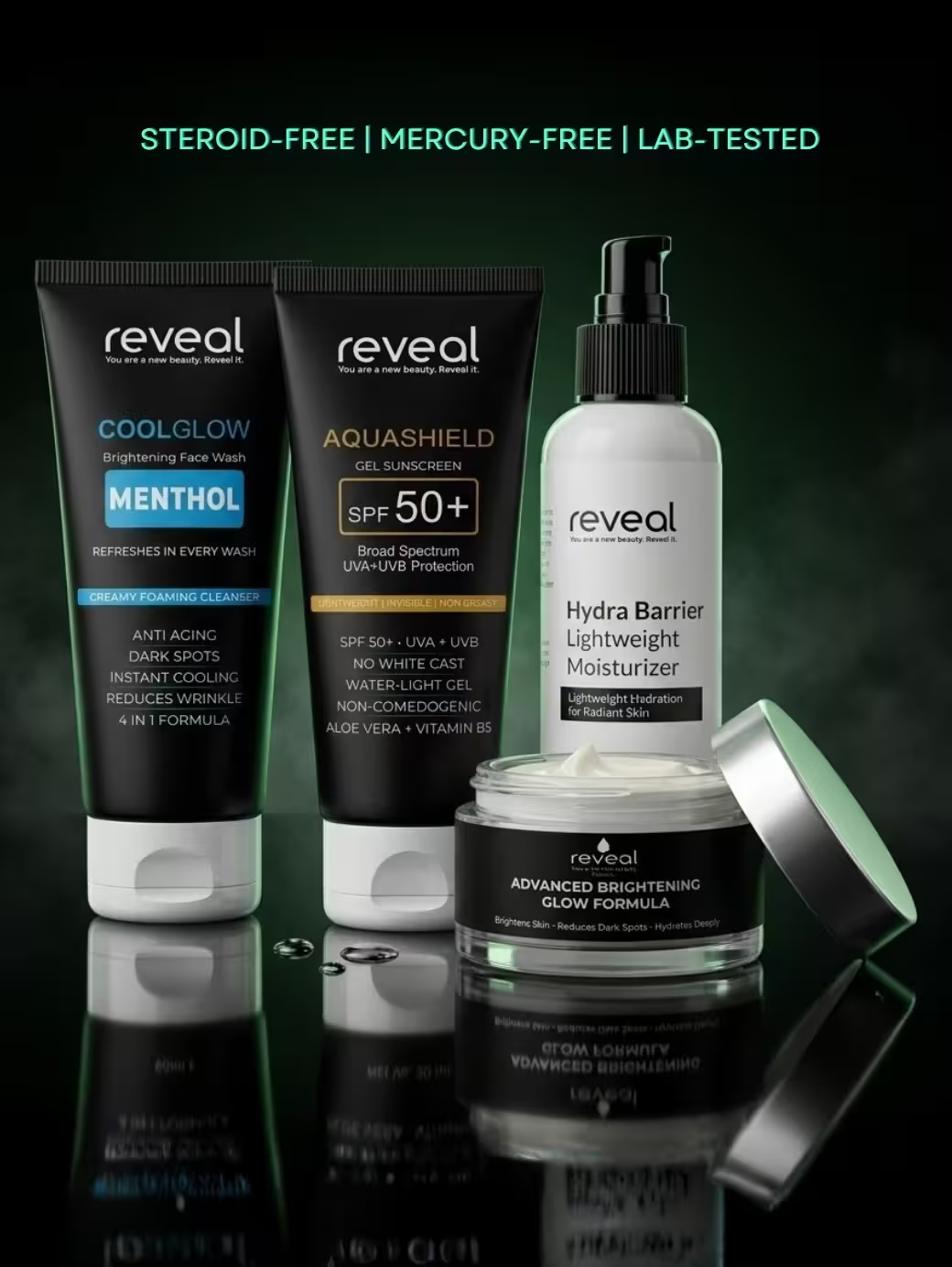
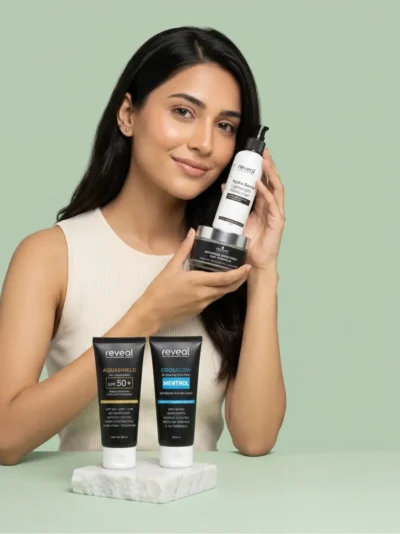
Quick Answer: Combination skin, an oily T-zone with normal-to-dry cheeks, is extremely common in Pakistan because of heat, humidity, hard water, and constant air conditioning. You do not need two separate routines. One balanced routine, a gentle oil-regulating cleanser plus a lightweight, non-greasy moisturizer, works for both zones at once. Reveal CoolGlow Face Wash and Hydra Barrier Moisturizer are formulated for exactly this balance. Steroid-free, mercury-free, lab-tested.
Combination Skin in Pakistan, Why It Happens
If your forehead, nose, and chin shine by midday while your cheeks feel normal or even tight, you have combination skin, one of the most common skin types in Pakistan, and one of the least talked about.
Two forces work against each other on Pakistani faces every day. Heat and humidity push oil glands in the T-zone into overdrive. At the same time, air conditioning indoors and hard water when you wash your face both pull moisture out of the skin, especially around the cheeks and jawline. The result: oily in the middle, dry or normal around the edges, sometimes on the same face at the same time of day.
Add urban pollution in cities like Lahore and Karachi, which sits on oily skin and clogs pores faster, and seasonal extremes between summer humidity and dry winter air, and combination skin becomes almost the default for a lot of people here, not the exception.
The Mistake Almost Everyone Makes
The most common reaction to an oily T-zone is reaching for a harsh, oil-stripping face wash. It feels productive in the moment, squeaky-clean skin. But it strips the already-dry cheeks even further, and it can trigger the T-zone to produce more oil to compensate for what was just stripped away. You end up chasing the same problem in a loop, washing harder, getting oilier.
The second common mistake is using two completely different routines, a mattifying gel for the T-zone and a rich cream for the cheeks. This works, technically, but it is expensive, time-consuming, and most people give up on it within a few weeks.
What Actually Works, One Balanced Routine
You need one cleanser that regulates oil without over-drying, and one moisturizer that hydrates without adding shine. That is genuinely achievable with the right ingredients.
| What You Need | Why It Matters for Combination Skin |
|---|---|
| Niacinamide in your cleanser | Regulates sebum in the T-zone without stripping the rest of the face |
| Gentle exfoliation (Lactic Acid) | Clears buildup evenly across the face without harsh scrubbing that irritates dry cheeks |
| SLS-free formula | Cleanses without stripping the skin’s natural moisture barrier |
| Hyaluronic Acid moisturizer | Water-based hydration absorbs fast, no greasy residue on the T-zone, still hydrates dry cheeks |
The Self-Test, Are You Actually Combination Skin?
- Wash your face, wait 30 minutes without applying anything.
- If your forehead, nose, and chin look shiny while your cheeks feel normal or tight, that is combination skin.
- If your entire face is shiny, that is oily skin, not combination.
- If your entire face feels tight and flaky, that is dry skin, not combination.
Your Daily Routine
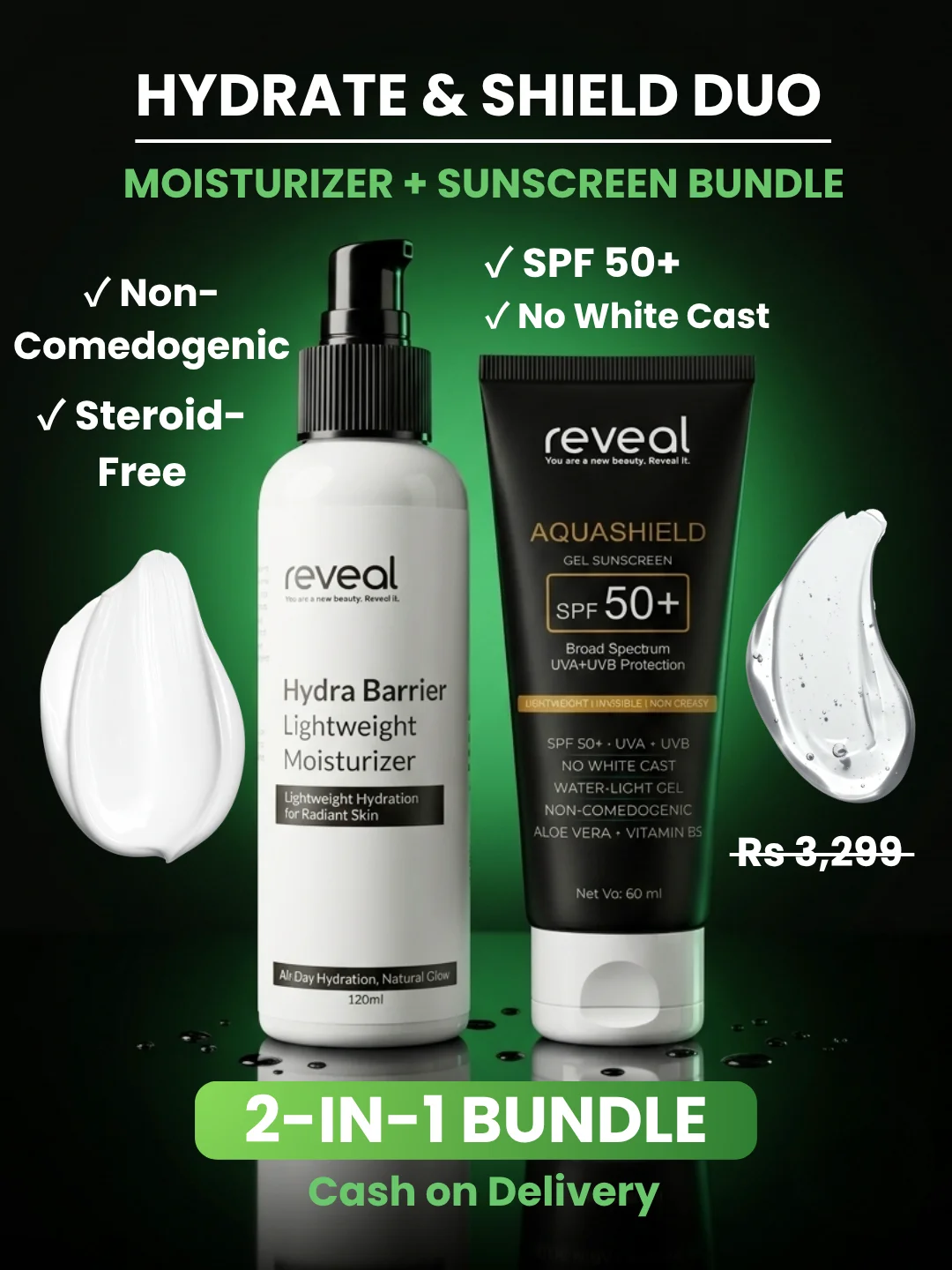
- Morning: Cleanse with Reveal CoolGlow Face Wash (Niacinamide + Tea Tree regulate the T-zone without stripping cheeks), moisturize with Reveal Hydra Barrier, finish with Reveal AquaShield SPF 50+.
- Night: Cleanse again, moisturize again. That’s it, one routine, both zones covered.
Steroid-Free, Mercury-Free, Lab-Tested
Combination skin already has a delicate oil-moisture balance. The last thing it needs is a harsh whitening cream with hidden steroids that further disrupts that balance. Every Reveal product used in this routine is independently lab-tested, steroid-free, and mercury-free.
Disclaimer: This is cosmetic skincare content, not a medical diagnosis. Results vary by individual. For persistent skin concerns, consult a dermatologist.
Frequently Asked Questions
Q: Can combination skin become oily skin or dry skin over time?
A: Yes. Combination skin can shift with age, season, and climate. Many people are more combination in summer and closer to normal-to-dry in winter. Reassess your skin every few months rather than assuming it never changes.
Q: Should I use different products on my T-zone and cheeks?
A: Not necessarily. A well-formulated cleanser and lightweight moisturizer, applied evenly, can balance both zones without needing two separate product lines. Spot-treating with a mattifying product on just the T-zone is optional, not required.
Q: Is combination skin more common in Pakistan than other skin types?
A: It is extremely common, driven by the combination of high heat and humidity outdoors and constant air conditioning indoors, plus hard water in many cities. This specific climate mix creates the T-zone oil and cheek dryness pattern more than in drier or more temperate climates.
Q: What ingredients should combination skin avoid?
A: Avoid harsh sulfate (SLS) cleansers and high-alcohol toners, both strip the skin and worsen the imbalance, often triggering more oil production in the T-zone as compensation.






Comment (1)
[…] If you have oily or combination skin and want the full daily structure this routine fits into, see our guides on the complete skincare routine for oily skin in Pakistan and the one-routine guide for combination skin. […]