
Steroid-Free and Mercury-Free, Why That Actually Matters in Pakistan
Is skincare safe in Pakistan right now, genuinely? Every skincare brand says some version of “safe” or “gentle” on the packaging. Almost none of them explain what they are actually being checked against, or why that specific check matters here more than it does almost anywhere else. This is not a small, technical detail. It is the difference between a cream that genuinely just moisturizes your skin, and one that is quietly altering it in ways you were never told about.
What Steroid Contamination Actually Does
Topical steroids are not inherently dangerous, dermatologists prescribe them for specific skin conditions under supervision, for limited periods of time. The problem is undeclared steroids mixed into everyday creams sold as ordinary moisturizers or “brightening” products, used daily, for months or years, with no medical supervision at all.
Skin that has been exposed to undeclared steroids for an extended period develops a condition often called steroid-damaged skin or topical steroid withdrawal. The skin becomes thinner, more fragile, and paradoxically more reactive, not less. It can develop broken capillaries, persistent redness, and a dependency where stopping the product causes the skin to flare up worse than before, which keeps people buying the same cream to manage a problem the cream itself was quietly causing.
A genuinely steroid free moisturizer Pakistan customers can trust is rarer than the packaging claims suggest. This is not a rare, isolated issue. Independent testing of skin-lightening and “fairness” creams sold in Pakistan has repeatedly found corticosteroids like betamethasone, dexamethasone, and hydrocortisone present without being listed on the label, alongside mercury in some samples. The products are not being sold as steroid creams. They are being sold as everyday brightening or moisturizing creams, which is exactly what makes this dangerous rather than simply a labeling technicality.
What Mercury Contamination Actually Does
Mercury has been used in some skin-lightening products because it inhibits melanin production, which can create a temporary lightening effect. It is also a heavy metal that accumulates in the body over time, and topical exposure is absorbed through the skin. Documented health effects from mercury exposure through skincare include kidney damage, nervous system effects, and skin reactions ranging from rashes to permanent discoloration.
Pakistan’s Competition Commission has specifically flagged this pattern in public statements, noting that certain products marketed under labels like “fairness,” “glow,” or “lightening” have been found to contain mercury while the packaging gives no indication of it. Peer-reviewed testing of skincare samples from Pakistani markets has found mercury levels significantly above the internationally recognized safety limit of 1 part per million in a meaningful share of products tested, sometimes by a very large margin.
A genuinely mercury free cream Pakistan buyers can verify should be backed by testing, not just a label. None of this means every cream on a Pakistani shelf is contaminated. It means the category has a real, documented problem, which is exactly why “steroid-free” and “mercury-free” are not marketing decoration when a brand actually means them. They are a specific claim that should be backed by lab testing, not just a phrase.
How to Know If a Cream Has Steroids, Checking It Yourself
You cannot see steroids or mercury by looking at a cream, and you usually cannot smell them either, which is part of why this problem persists. A few practical signals are worth knowing, even though none of them are a substitute for lab testing.
Extremely fast results are a warning sign, not a good one. Genuine brightening or corrector ingredients like Niacinamide, Alpha Arbutin, or Vitamin C typically take four to eight weeks of consistent use to show visible change. A cream that visibly lightens skin within days is far more likely to contain something undeclared than to be a breakthrough formula.
Rebound reactions after stopping a product are a red flag. If skin becomes noticeably worse (more red, more sensitive, breaking out, or darker) within a week or two of stopping a cream you used regularly, that pattern is consistent with steroid dependency, not a normal reaction to simply changing routines.
A full ingredient list you can actually read matters more than a “safe” label. Brands that publish their complete INCI ingredient list, not just a curated highlight of two or three actives, give you something to actually check, including looking up unfamiliar ingredient names yourself.
Lab testing claims should be specific, not vague. “Lab-tested” without saying tested for what, by whom, or when is close to meaningless. A brand that means it usually says what the testing covers.
Why This Shapes How Reveal Formulates
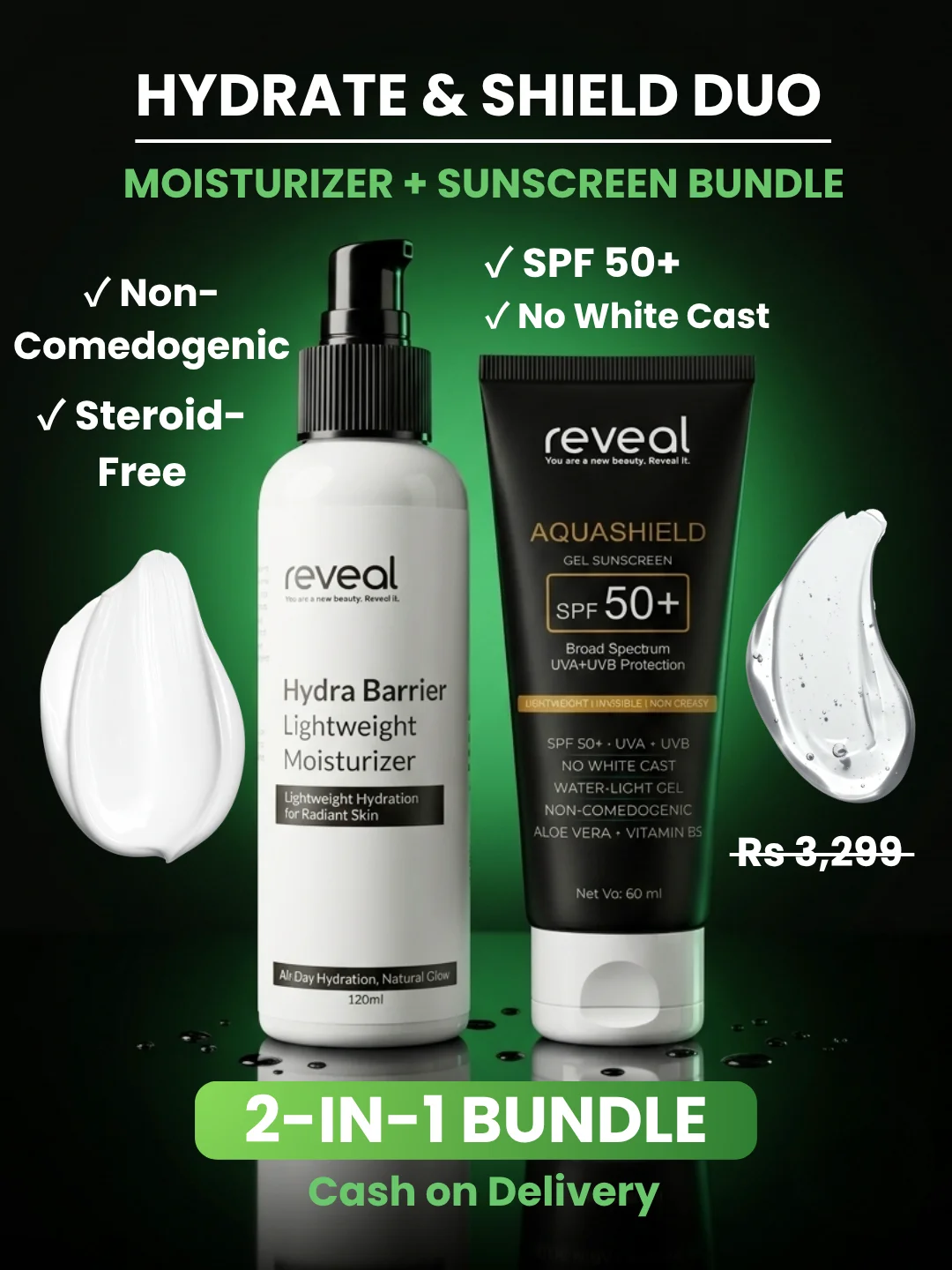
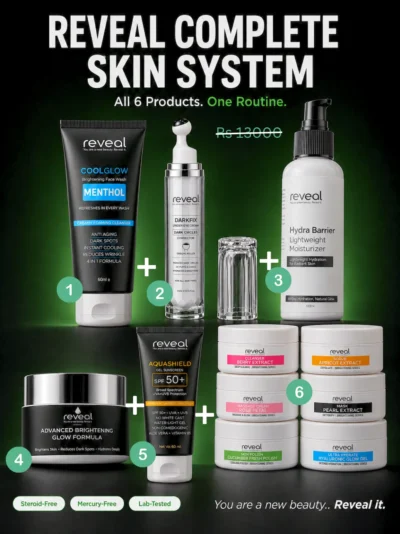
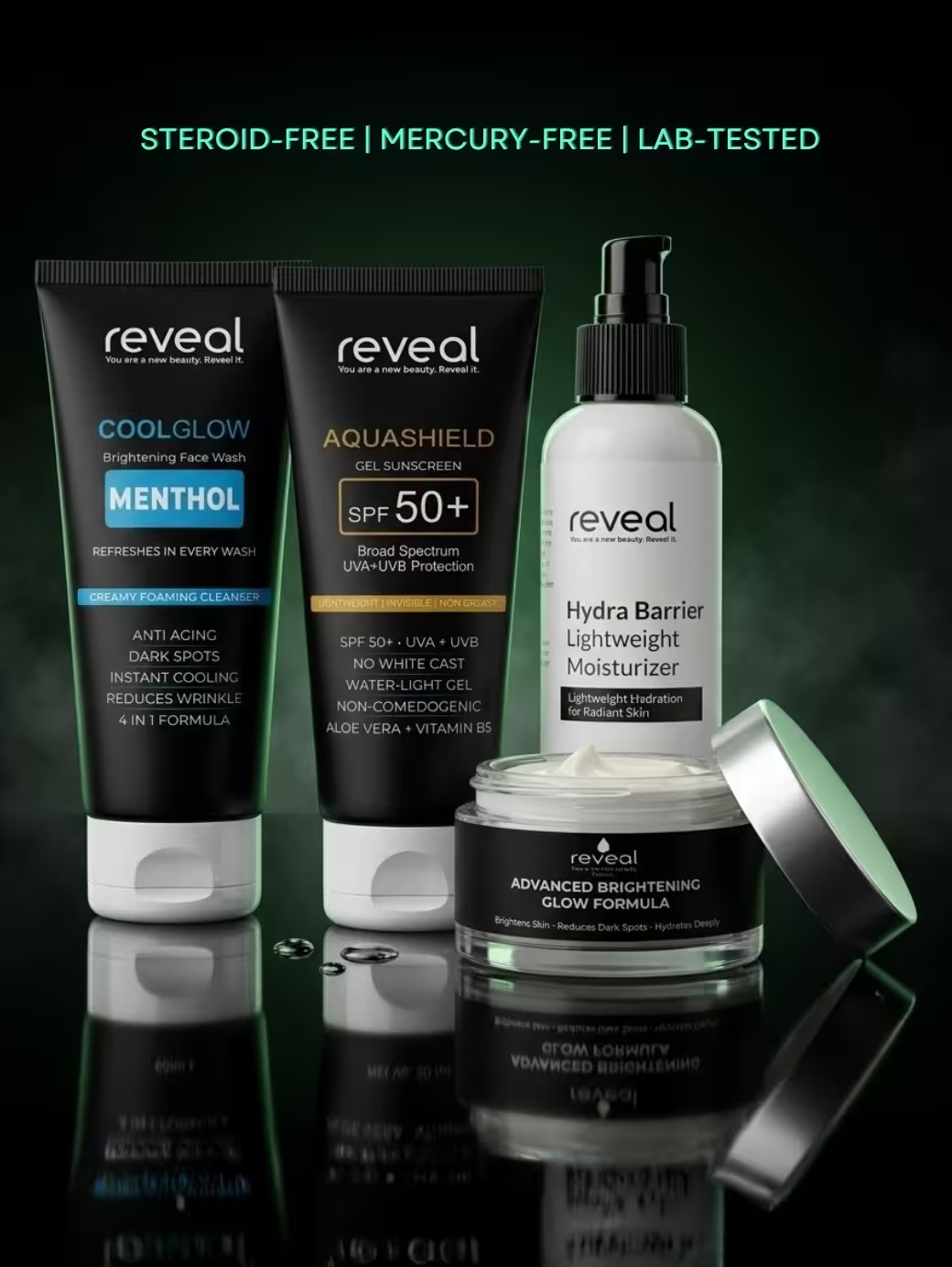
Every Reveal product, including Hydra Barrier, is formulated to be steroid-free and mercury-free, and is lab-tested against exactly this concern, not as an afterthought but as the starting requirement before anything else about the formula gets decided. This is also why Reveal avoids instant-result claims that are common in the exact category of product most associated with undeclared steroid contamination in Pakistan. Genuine barrier repair and hydration take weeks to show results, not days, and that timeline is a feature of an honest formula, not a limitation of it.
The goal is not to make you afraid of skincare. It is to make the actual questions worth asking clear enough that “safe skincare brands Pakistan” stops being a vague search term and starts being something you can genuinely evaluate for yourself.
You are a new beauty.. Reveal it.
FAQ
Q: How do I know if a cream has steroids in it?
A: There is no way to tell just by looking, but warning signs include extremely fast visible results (within days rather than weeks), skin becoming noticeably worse shortly after stopping the product, and a brand that will not share a complete ingredient list. None of these confirm contamination on their own, but they are worth taking seriously together.
Q: Is mercury actually found in skincare sold in Pakistan?
A: Yes, this has been documented repeatedly. Independent testing and regulatory statements have found mercury in some products marketed as fairness or brightening creams, sometimes at levels well above the internationally recognized safety limit, despite the packaging giving no indication of it.
Q: What does steroid-free actually mean on a product label?
A: It means the formula does not contain topical corticosteroids (like betamethasone, dexamethasone, or hydrocortisone), which are sometimes added undeclared to everyday creams to create fast, temporary skin changes at the cost of long-term skin health.
Q: How long should a genuine brightening cream take to show results?
A: Typically four to eight weeks of consistent use for real actives like Niacinamide, Alpha Arbutin, or Vitamin C. Visible change within just a few days is a warning sign rather than a good result.
Q: Are all skincare brands in Pakistan unsafe?
A: No. The documented problem is real but affects specific products, not the entire market. Brands that publish full ingredient lists, avoid vague “clinically proven” style claims, and can explain what their lab testing actually covers are giving you something real to evaluate.